Date
Munich
CountryGermany
- Reading
- 16 min
- Words
- 3,699
- Images
- 87
Day 78 was one of the most powerful and educational days of the entire trip.
I arrived in Munich early and headed straight to Dachau, the first Nazi concentration camp, which had already been operating since March 1933. Walking through it was one of the most sobering experiences of my life. The scale of suffering was hard to comprehend, especially knowing this wasn’t some remote place — it was just outside a major German city.
While I was there, I met Eric, a South African guy who lived in what used to be the athletes’ housing for the 1972 Munich Olympics. When he casually mentioned what had happened to the Israeli athletes during those Games, I was embarrassed to admit I had almost no idea. He ended up giving me an impromptu history lesson that I’ve never forgotten.
After Dachau, Eric took me on a personal tour of Munich — the Olympic Village, the site of the hostage crisis, the Rathaus with its famous Glockenspiel, and the massive Frauenkirche. What started as a heavy, somber day slowly shifted. That evening he took me to the Hofbräuhaus, one of Munich’s oldest and most famous beer halls. Sitting there with a liter of beer and bratwurst after everything I’d seen and learned felt almost surreal — a strange but fitting way to end one of the most impactful days of the trip.

My Photographs from today at Dachau Concentration camp near Munich, Germany
-
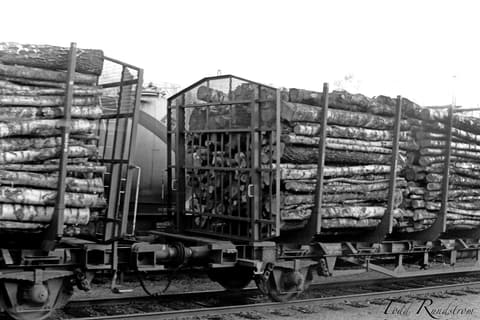
Train Tracks at Dachau Get this as a printThese freight cars loaded with logs were sitting on the very same railway tracks that once carried Jewish people, political prisoners, and other victims into Dachau Concentration Camp. Dachau was the first camp built by the Nazis, opening in March 1933 — years before the war even started — and remained in operation until American forces liberated it in April 1945. More than 31,000 people died here. Even though this was just a simple photo of timber being transported, standing there looking at those tracks gave me chills.
-

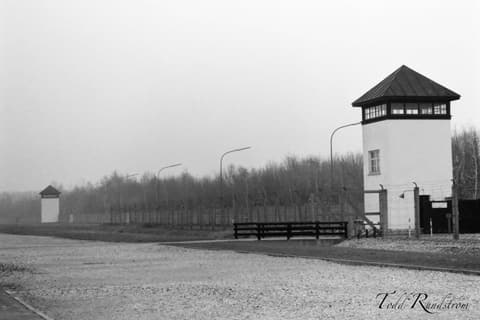
The Perimeter of Dachau Get this as a printThis gravel walkway ran along the perimeter of Dachau, surrounded by guard towers, barbed wire and concrete walls. From inside the camp, the layers of fencing and regularly spaced towers made clear how completely prisoners were isolated from the outside world.
-
Get this as a print -

Prisoner Barracks Get this as a printThis long building is one of the reconstructed living quarters at Dachau. The original wooden barracks were designed to hold around 200 prisoners, but as the camp became overcrowded they often held more than 1,600 people in the same space. Prisoners slept on multi-tiered wooden bunks with almost no bedding, in freezing cold or extreme heat, with little sanitation and rampant disease. Standing in front of this building, it was hard to imagine how anyone survived the conditions inside.
-

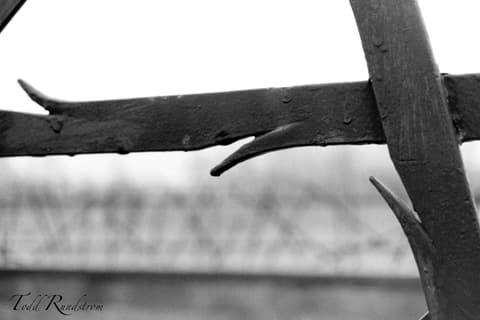
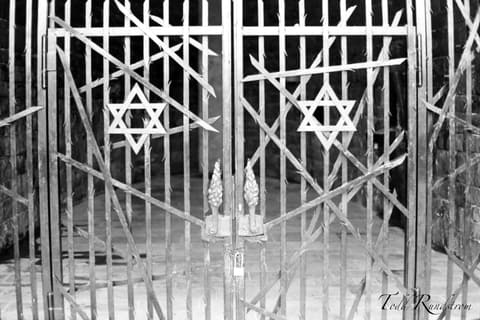
Jewish Memorial Get this as a printDesigned by architect Hermann Zvi Guttmann and dedicated in 1967, the Jewish Memorial honors the Jewish prisoners who suffered and died at Dachau. Its descending walkway leads visitors into a dark, confined space surrounded by sharp metal, while an opening above draws the eye back toward the sky and light. Inside, a small memorial candle burned behind the bars. The Stars of David, heavy iron gate, spikes, darkness and light made this one of the most powerful places I photographed at Dachau.
-

Get this as a print -

Get this as a print -
Get this as a print -
Get this as a print -

Get this as a print -

Get this as a print -

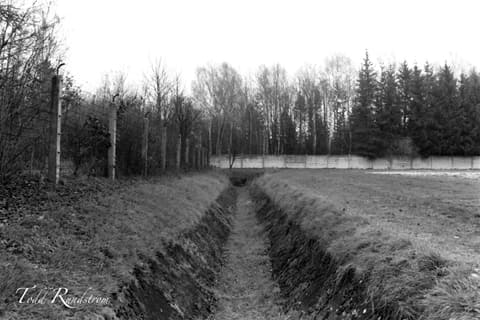
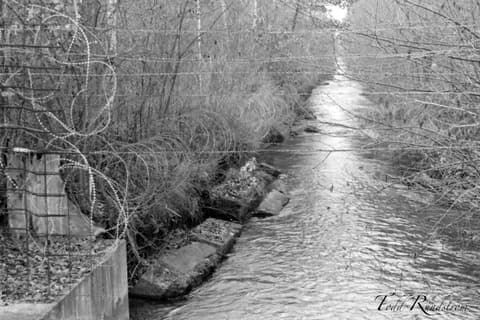
The Perimeter of Dachau Get this as a printDachau was surrounded by layer after layer designed to make escape nearly impossible. A deep ditch and “death strip” separated prisoners from the electrified barbed-wire fence, while armed guards watched from towers along the perimeter. Loudspeakers carried SS orders and announcements throughout the camp. Beyond the fences and walls were thick woods and, on the west side, the River Würm — another natural barrier between the prisoners and the outside world.
-
Get this as a print -

Get this as a print -

Get this as a print -

Get this as a print -

Get this as a print -
Get this as a print -

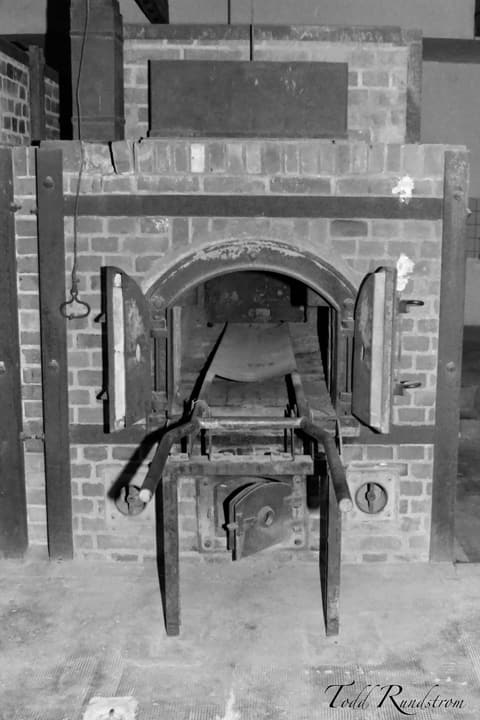
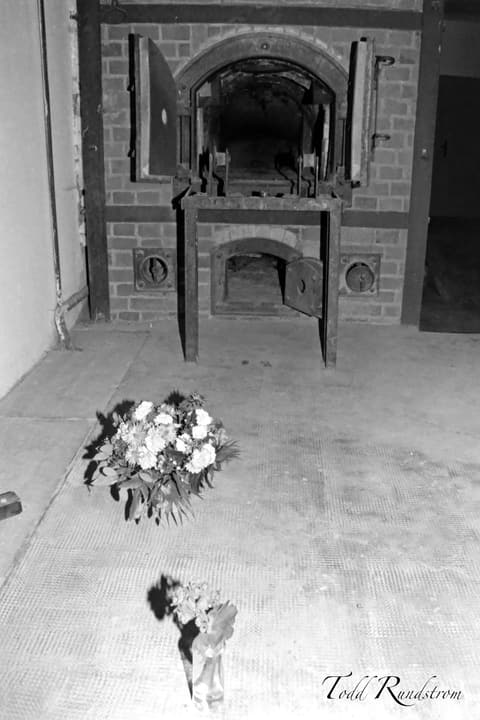
The Crematorium at Dachau Get this as a printThe crematorium at Dachau was one of the most difficult places I visited that day. A stone memorial outside reads, “Crematorium Think of How We Died Here.” Inside Barrack X, four large brick ovens were used to cremate prisoners who died from disease, starvation, beatings or execution. The open oven doors, metal stretchers, ash grates and blackened brick made the industrial scale of death horrifyingly tangible.
Someone had placed flowers in front of one of the ovens. Surrounded by all that cold brick and iron, that simple gesture of remembrance felt deeply human and moving.
-

Get this as a print -
Get this as a print -

Get this as a print -

Get this as a print -

Get this as a print -

Get this as a print -
Get this as a print -
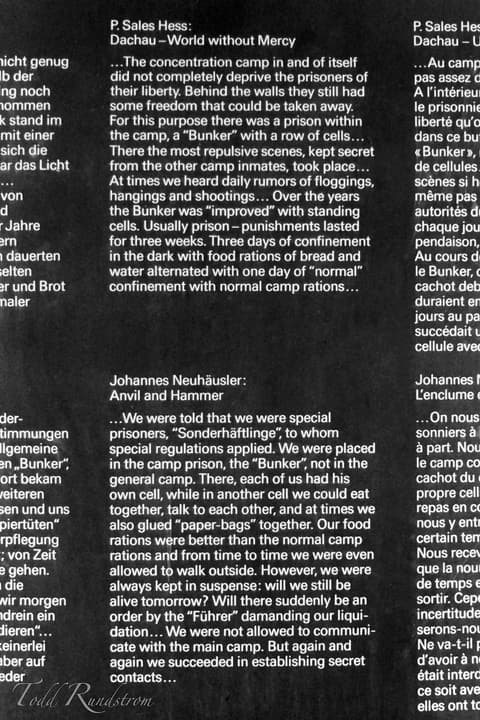
Prisoner Stories Get this as a printInside the camp there is a long wall filled with the personal testimonies of former prisoners. These two short excerpts are just a small sample of the hundreds of stories visitors can read.
One describes the dreaded “Bunker” — a prison within the camp where floggings, hangings, and shootings took place, and where prisoners were locked in standing cells for weeks at a time.
The other comes from a special prisoner who lived with constant uncertainty, never knowing if the next day would bring freedom or a sudden order for liquidation.
Reading their own words made the history feel immediate and personal in a way that buildings and photographs alone never could.
-

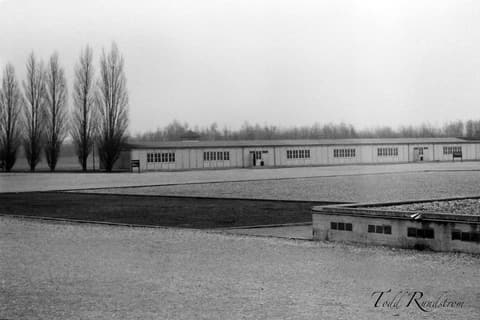
Guard Tower and Barrack Foundations Get this as a printNearly all of the original prisoner barracks were destroyed after the war. Only the concrete foundations remain, laid out in long, orderly rows. There were 32 barracks in the main prisoner camp area. These empty outlines give a clear sense of just how densely the camp was packed and how many people once lived here under the constant watch of the guard towers.
-

Get this as a print -

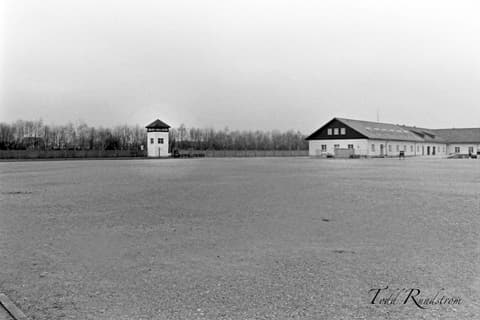
The Camp Prison — The Bunker Get this as a printThe long white building was the camp prison, known as the “Bunker,” one of the most feared places at Dachau. Prisoners were held in solitary confinement, tortured and interrogated here, sometimes confined for weeks in tiny standing cells. Inside, door after door lined the long bare hallway, each leading to a solitary cell. Standing there, it was easy to imagine the silence, fear and isolation that filled these corridors.
-

Get this as a print -
Inside the Prisoner Barracks Get this as a printThe original accommodation barracks at Dachau were designed to hold about 200 prisoners each, but by the final months of the war as many as 1,600 to 2,000 men were packed into a single building. The originals were demolished in the 1960s, and two were reconstructed so visitors could experience the scale and layout of the prisoners’ living quarters.
Inside were triple-tier wooden bunks where men slept crowded together, often with little more than a thin blanket. A day room contained simple wooden tables and benches, while rows of toilets offered no privacy at all. As the camp became increasingly overcrowded, sanitation deteriorated and disease spread rapidly.
-

Get this as a print -

Get this as a print -

Get this as a print -

Get this as a print -
Roll-Call Square Get this as a printThis vast open courtyard is the former Appellplatz, where prisoners stood for morning and evening roll call. Thousands of men lined up in perfect rows, often for an hour or more, in every kind of weather. If the count was wrong they stood even longer. Many who were already weak collapsed and died right here.
-

Freedom Outside the Fence Get this as a printA lone cyclist rides along the perimeter of Dachau beside the concrete posts, high-voltage barbed wire and deep ditch that once made escape nearly impossible. I had arrived on a tour bus with a large group of people, so seeing someone simply pedal up on a bicycle felt strangely casual. The contrast was impossible to miss — ordinary freedom of movement alongside the barriers that had once imprisoned thousands of people.
-

Get this as a print -

Get this as a print -

Maintenance Building Get this as a printThis large white structure is the former Maintenance Building, built by the SS in 1937–38. It housed workshops, the laundry, the kitchen, and the “shunting room” where new prisoners were registered, stripped, shaved, and issued uniforms. A large inscription from Himmler once ran along the roof facing the roll-call square. Today the building contains the main historical exhibition. The International Monument stands in the open space in front of it.
-

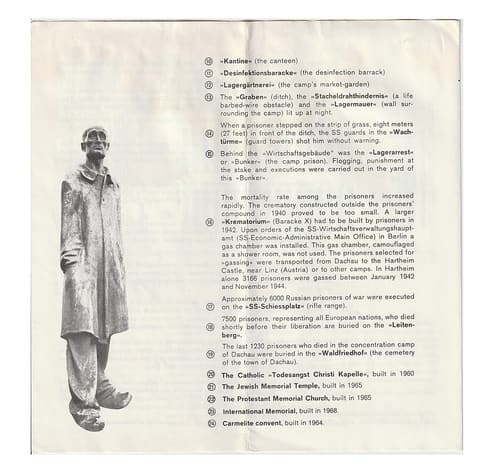
International Monument Get this as a printThis bronze sculpture is the heart of the International Monument at Dachau. It was created by Yugoslav sculptor Nandor Glid, a Jewish artist whose own family was murdered in Auschwitz and who himself survived forced labor and later joined the resistance. The monument was inaugurated on September 8, 1968.
The tangled, emaciated human figures are caught in barbed wire, their bodies twisted and stretched in despair. It stands as a powerful symbol of the suffering and dehumanization endured by the prisoners. The dates “1933–1945” mark the years of the camp’s existence. Fresh flowers are almost always left at its base.
-

Ashes of the Unknown Concentration Camp Prisoner Get this as a printMy final photograph from the Dachau Concentration Camp Memorial Site — and the only one I shot in color.
This stark stone memorial, topped with white pebbles, notes, dried flowers, and a palm frond left by visitors, bears the French inscription CENDRES DU CONCENTRATIONNAIRE INCONNU (“Ashes of the Unknown Concentration Camp Prisoner”). It contains the ashes of an unidentified victim of the camp and stands as a quiet, universal tribute to the nameless dead.
The tradition of placing stones on the memorial echoes Jewish mourning customs and the countless personal remembrances left here.
ScansMemorial site Concentration camp Dachau · 4 pages
-

-

-

-
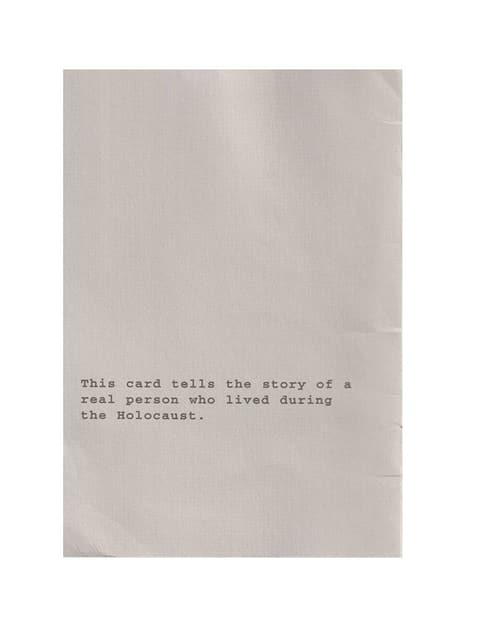
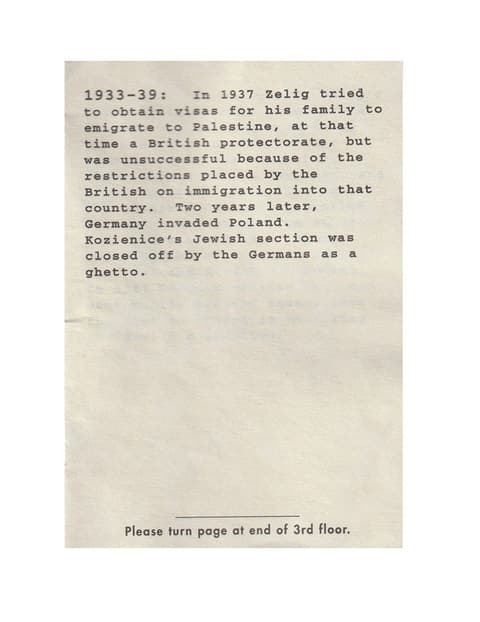
Thousands of these small, pocket-sized Identification Cards were available inside the Memorial and visitors were encouraged to take one and promise to never forget.
ScansEzra Szabasson Identification Card · 6 pages
-

-
-

-
-

-

My Photographs from today in Munich, Germany
-

Jägermeister Bus Get this as a printSeeing the big Jägermeister logo on the side of the bus made me smile right away. I was already a huge fan — I’d even scored a bottle with Dorte and her family just a few weeks earlier — so spotting that classic stag-and-cross ad felt like a perfect little sign that the day was going to be a good one.
-

The 1972 Munich Olympic Village Get this as a printThis was the view from high up in Eric’s building in the former athletes’ village from the 1972 Olympics. From his window we could see the apartment blocks, the Olympic Village and the iconic tent-roofed stadium in the distance.
Then Eric pointed out the buildings where members of Black September had taken Israeli athletes hostage during the 1972 Games. Eleven Israeli athletes and coaches were ultimately killed. I was embarrassed to admit that I had never even heard of the Munich massacre until that afternoon. Standing there with Eric, looking directly at where it happened, made the history immediate and real in a way no textbook ever could.
The attack fundamentally changed security at the Olympic Games. What had been intended as the relaxed “Games of peace and joy” became a turning point, with future Olympics adopting dramatically increased security around athletes and Olympic venues.
-

Get this as a print -

Get this as a print -

Olympic Swimming Hall Get this as a printEric took me inside the swimming complex, which was still very much alive and being used by the people of Munich. It was packed that afternoon. Standing there looking up at the Olympic diving platforms, I was struck by just how high they really were — suddenly I had the same kind of respect for those divers that I’d felt for the ski jumpers in Lillehammer.
-

Olympic Stadium Lights at Night Get this as a printWhen we came out of the swimming hall I noticed the lights were on in the Olympic Stadium. Eric said it was used all the time — it could have been for a local soccer game or even a concert. Seeing the big floodlights blazing and the stadium still alive more than twenty years after the Games made the whole Olympic Park feel like it never really shut down.
-
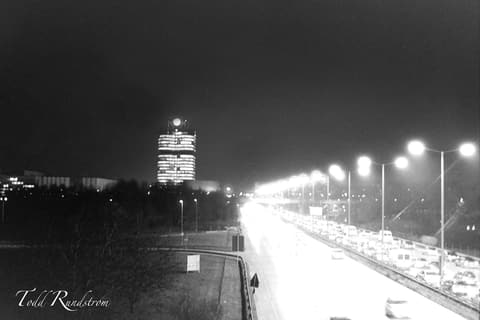
BMW Four-Cylinder Headquarters Get this as a printEric told me the building was designed to look like a four-cylinder engine — and once you know that, you can’t unsee it. Standing there at night with the traffic streaking past and the round BMW logo glowing on top, the whole tower really did look like a giant engine block rising out of the Olympic Park. It was a cool piece of architecture.
-

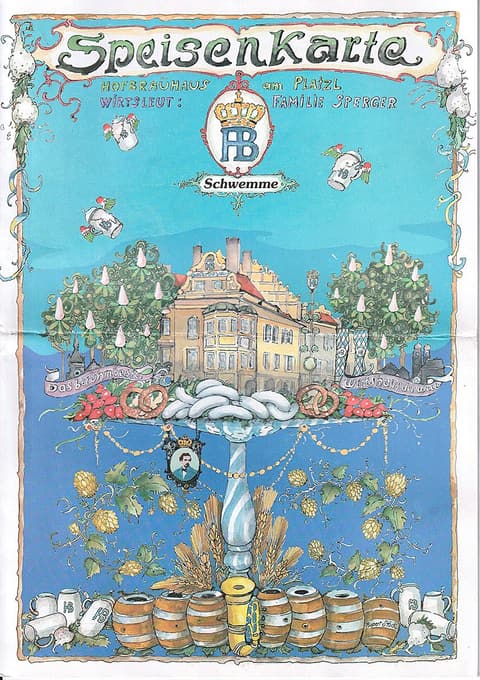
This is the famous Hofbräuhaus am Platzl, Munich’s oldest and most legendary beer hall. It was originally built in 1589 by Bavarian Duke Maximilian I as an extension of the royal brewery, and the general public was first admitted in 1828 by King Get this as a printThis is the famous Hofbräuhaus am Platzl, Munich’s oldest and most legendary beer hall. It was originally built in 1589 by Bavarian Duke Maximilian I as an extension of the royal brewery, and the general public was first admitted in 1828 by King Ludwig I. Almost the entire building was destroyed in World War II bombings and carefully rebuilt afterward.
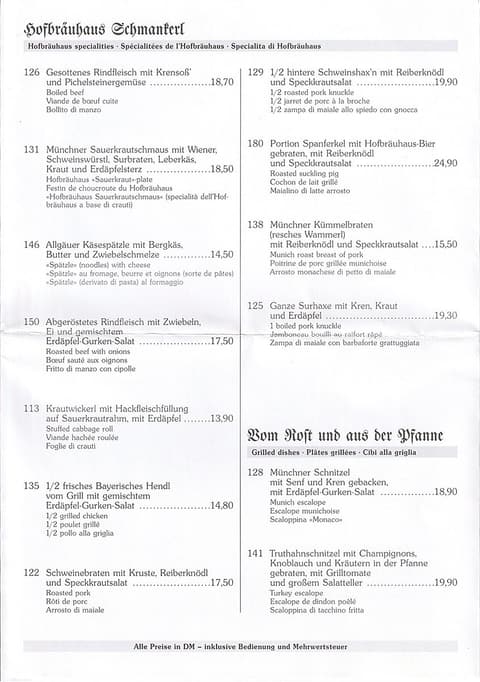
Eric brought me here for dinner, wouldn’t let me pay for a single thing, and we drank our beers by the liter while an Oompah band played. I had an absolute blast — Wiener schnitzel, bratwurst, and more beer than I could count.
-

Weisswurst and Pretzel Get this as a printClassic Bavarian Weisswurst served the traditional way — floating in hot water — with a big soft pretzel and sweet mustard.
-

Me holding a Maß at the Hofbräuhaus Get this as a printEric grabbed my camera and took this picture of me. I was holding a Maß (pronounced roughly “mahs”) — the traditional Bavarian one-liter beer mug that is the standard serving size at the Hofbräuhaus and every real Munich beer hall. Big smile, big liter of beer, and one of the best nights of the whole trip, all thanks to one of the friendliest South Africans I’d ever met.
-

The Oompah Band at the Hofbräuhaus Get this as a printThe Blaskapelle Reinhold kept the Hofbräuhaus rocking with accordion, brass, Lederhosen, dirndls and pure Bavarian beer-hall energy. The live bands played throughout the day and evening, and Eric and I sat right in the middle of it with our Maßs while the whole place sang, stomped and celebrated.
-

Get this as a print -

Get this as a print -

Shared Table at the Hofbräuhaus Get this as a printThe long tables at the Hofbräuhaus are meant to be shared — no reservations in the main hall, you just sit down with whoever’s there. Eric and I ended up with this rowdy, laughing group of Japanese tourists who were clearly having the time of their lives. They might have been having even more fun than I was!
-
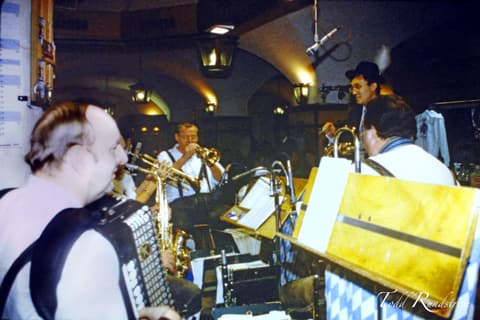
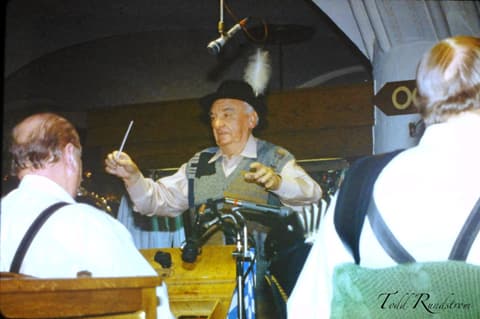
Guest Conductor at the Hofbräuhaus Get this as a printOne of the Japanese guys from our shared table got pulled up on stage to “conduct” the Blaskapelle Reinhold. He grabbed the baton and really got into it while the band kept the Oompah going strong. I jumped into full concert-photographer mode, moving around for a better angle while he had his moment in the spotlight. When his big performance ended, the regular maestro stepped back up and took command again.
-

Get this as a print -
Get this as a print -
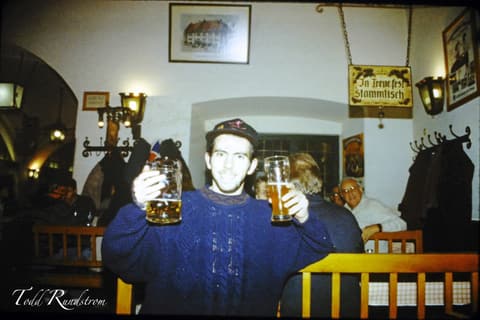
Two-Fisting the Mammoth Maß Get this as a printAfter the guest conductor wrapped up and the real band took back over, I grabbed a couple of fresh ones and went full two-fisted mode with these absolute units. Pure Hofbräuhaus victory pose!
-

My Last Photo with Eric Get this as a printMonths later when I finally developed the film, this shot of me and my new friend came out completely out of focus. I had handed my camera to one of the drunk Japanese tourists at our table, thinking he would do a great job — and instead the auto-focus, which was designed to focus on whatever was in the middle of the frame, chose the back wall instead of us. Classic pre-smartphone heartbreak. Doh!
1994From my journal
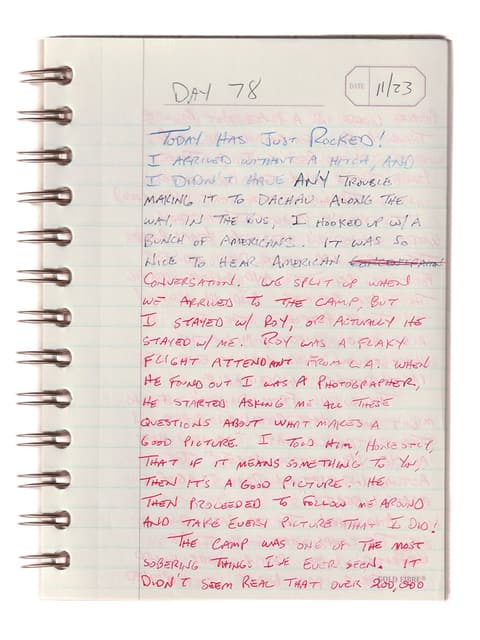
DAY 78 / 11-23-94My amazing day in Munich, Germany
Today has just rocked!
I arrived without a hitch, and I didn’t have any trouble making it to Dachau. Along the way, in the bus, I hooked up with a bunch of Americans. It was so nice to hear American conversation. We split up when we arrived to the camp, but I stayed with Roy, or actually he stayed with me.
Roy was a flaky flight attendant from LA. When he found out I was a photographer, he started asking me all these questions about what makes a good picture. I told him, honestly, that if it means something to you, then it’s a good picture. He then proceeded to follow me around and take every picture that I did.
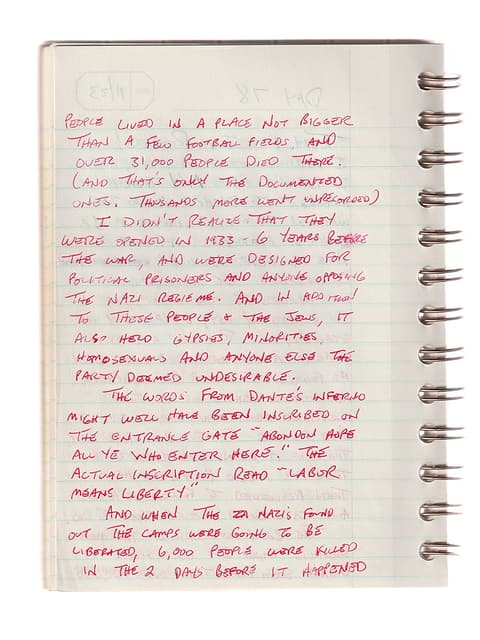
The camp was one of the most sobering things I’ve ever seen. It didn’t seem real that over 200,000 people lived in a place not bigger than a few football fields, and over 31,000 people died there (and that’s only the documented ones. Thousands more went unrecorded.)
I didn’t realize that they opened in 1933 – 6 years before the war, and were designed for political prisoners and anyone opposing the Nazi regime. And in addition to these people & the Jews, it also held gypsies, minorities, homosexuals and anyone else the party deemed undesirable.
The words from Dante’s Inferno might well have been inscribed on the entrance gate “Abandon hope all ye who enter here!” The actual inscription read “Labor Means Liberty”.
And when the Nazis found out the camps were going to be liberated, 6,000 people were killed in the 2 days before it happened.*
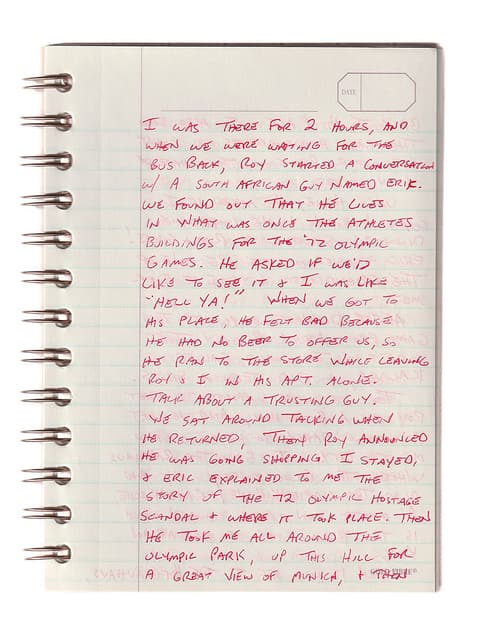
I was there for 2 hours, and when we were waiting for the bus back, Roy started a conversation with a South African guy named Eric. We found out that he lives in what was once the athletes’ building for the ’72 Olympic Games. He asked if we’d like to see it & I was like “Hell Ya!”
When we got to his place, he felt bad because he had no beer to offer us, so he ran to the store while leaving Roy & I in his apartment alone. Talk about a trusting guy.
We sat around talking when he returned, then Roy announced he was going shopping. I stayed, & Eric explained to me the story of the ’72 Olympic hostage scandal & where it took place.**
Then he took me all around the Olympic Park, up this hill for a great view of Munich, & then back to his place. I also saw the BMW Headquarters, a giant skyscraper built in the shape of 4 cylinders.
Once home, he asked if I was hungry, & he cooked me dinner! Served with Rum & Cokes! Eric turned out to be one of the friendliest guys I’ve ever met.
After dinner we played this game from Africa, possibly the oldest in the world, called Kalaha, & did tequila shots.
We were supposed to meet Roy at a beer hall, and we left a little early so he could show me the city. I saw the Rathaus, where the Glockenspiel is, and also the Marienkirche / Fravenkirche, a monstrous church which is the burial site of Bavarian kings.
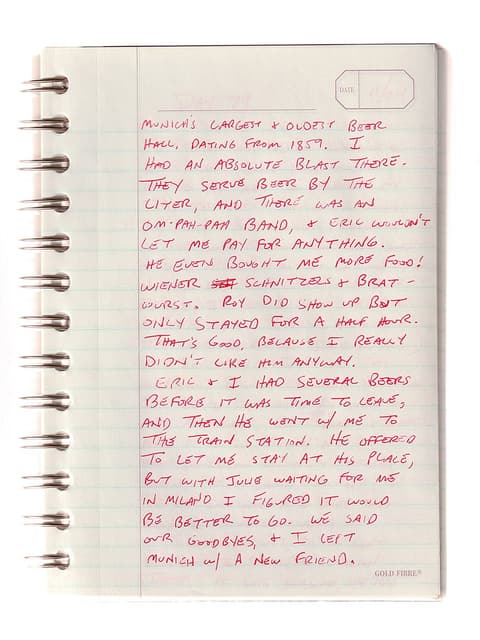
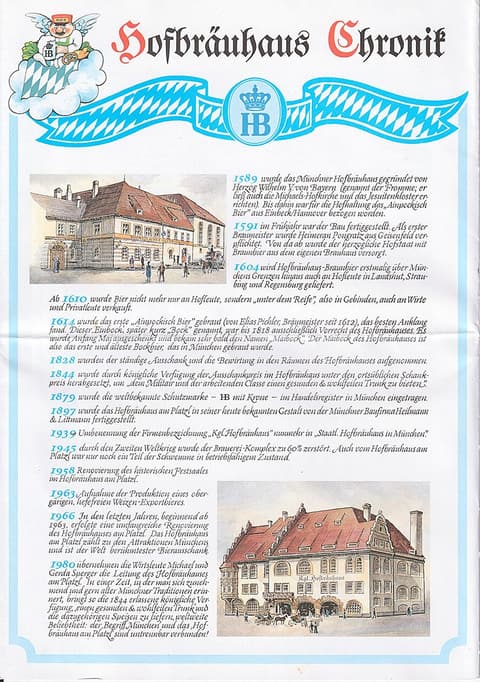
Then it was off to the Hofbräuhaus, Munich’s largest & oldest beer hall, dating from 1859. [Make that 1589!]
I had an absolute blast there. They serve beer by the liter, and there was an Om-Pah-Pah band & Eric wouldn’t let me pay for anything. He even bought me more food! Wiener schnitzels & brat-wurst. Roy did show up but only stayed for a half hour. That’s good, because I really didn’t like him anyway.
Eric & I had several beers before it was time to leave, and then he went with me to the train station. He offered to let me stay at his place, but with Julie waiting for me in Milano I figured it would be better to go.
We said our goodbyes, & I left Munich with a new friend.
JournalMy handwritten journal pages · 5 pages
-
-
-
-

-
ScansHofbräu House coaster · 2 pages
-

-

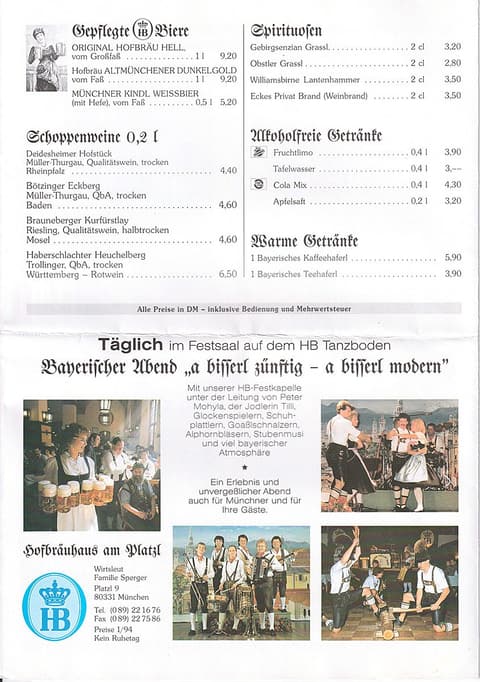
ScansHofbräuhaus Menu · 6 pages
-
-

-
-

-
-
2026Looking Back
This was one of the most powerful and sobering days of the entire trip.
Visiting Dachau was unlike anything I had experienced before. Walking through the camp where over 31,000 people died — knowing it had been operating since 1933, long before the war even started — left a deep mark on me. It was quiet, cold, and heavy. I remember standing there thinking about how something so horrific could happen in a place that looked, in some ways, almost ordinary. It was the kind of experience that doesn’t fully leave you.
Meeting Eric turned out to be one of the best surprises of the whole trip! He lived in what used to be the athletes’ housing for the 1972 Munich Olympics, and he ended up giving me one of the most important history lessons of my life. I was embarrassed to admit that I didn’t really know the details of what had happened to the Israeli athletes during those Games. Eric patiently explained everything — the hostage situation, the failed rescue attempt, and how it all unfolded right there in the Olympic Village. Learning about the Munich Massacre from someone who lived in that very place made it feel much more real.
That single day ended up being one of the most educational of the whole journey. I went from walking through a concentration camp in the morning, to learning about one of the darkest moments in Olympic history in the afternoon, to sitting in the Hofbräuhaus that night drinking beer with people from all over the world in the evening. It was a strange and intense contrast, but it somehow fit.
Looking back, I’m grateful I had that day. It forced me to confront parts of history I had only vaguely understood before. It also reminded me how much I still had to learn about the world.
Some days on this trip were about fun and adventure. Day 78 was about facing hard truths in the story of humanity.